Small Business Finance :: Articles

5 Credit Killers

What are the top factors that can damage your credit score?

5 Credit Killers

The information on this website is general in nature and does not take into account your objectives, financial situation, or needs. Consider seeking personal advice from a licensed adviser before acting on any information.

A good credit score speaks volumes about your financial habits. It's the evidence most creditors need to evaluate your credit worthiness.
Interestingly, there are some credit killers that even people maintaining good credit scores would unwittingly be a part of, which will be their undoing when applying for credit facilities in the future.
These mistakes may seem to be insignificant, but when the time comes, you may face more problems than you expect.

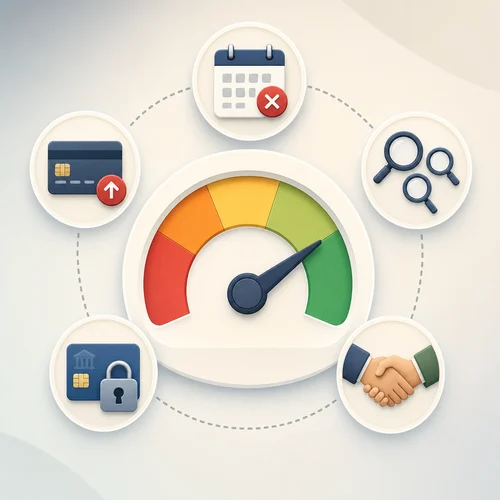
Avoiding Debt

Creditors need to evaluate your financial history to approve any credit facilities.
If you have no previous or existing debts, it might adversely affect your case, as creditors have no way of checking out how you'll handle the credit you get from them.

Shopping For Rates

Looking around for the best rate may actually turn out to be bad.
Too many inquiries within a short period could damage your credit score.
Usually, if you do more than 3 or 4 inquiries within a single month, you are likely to scare the lenders. For the same reasons, transferring the balances on your credit cards could be a bad idea as well.

Assuming There's a Grace Period

If you are late on a payment by even one day, you are late, period.
Never assume there's a grace period for late payments, because it only affects your credit score negatively.

Closing Old Accounts

Because your relevant transaction history also gets erased when you close your old accounts, your credit history is shortened and it may lower your credit score.
If you want to close your old accounts, close everything except the oldest account, which will leave a longer history.

Co-signing Loans

The obvious problem here is that the primary borrower's mistakes will end up on your credit report as well.

Published: Sunday, 1st Aug 2021
Author: Paige Estritori

Rate this article

0 Comments

No comments yet. Be the first to share your thoughts.


Business Loans Articles

Types of business loans in Australia explained
Australian small businesses can access several types of business finance, from term loans and lines of credit to equipment finance, invoice finance and commercial property loans. This guide explains how common business loan structures generally work and what to consider before applying. - read more
Investing in Growth: How to Finance Your Business Expansion Strategically
Australia's dynamic SME landscape is ever-evolving, constantly presenting new opportunities and challenges for today's entrepreneurs. Growth is not just a goal but a necessity for these small and medium enterprises to thrive in the competitive market. As these businesses stand on the cusp of expansion, it becomes critical to recognize the indicators for growth and to approach this next stage with a robust strategic plan. - read more

Finance News

Why Rising Debt Stress Should Prompt SMEs to Review Finance Early
15 Sep 2026: Paige Estritori
Fresh industry attention on small business debt stress is a timely reminder that borrowing pressure rarely appears overnight. For many Australian SMEs, the squeeze builds gradually: a slower sales month, higher supplier costs, delayed customer payments, tax instalments, payroll commitments and existing loan repayments all competing for the same working capital. - read more
What the Instant Asset Write-Off Means for SME Borrowing
08 Sep 2026: Paige Estritori
Australian small businesses are again watching the instant asset write-off closely, with the federal government seeking to keep the threshold available for eligible assets. For many SMEs, the measure can make planned investment in tools, vehicles, technology or machinery more attractive because the cost of qualifying assets may be deducted sooner rather than depreciated over several years. - read more

Need Help Finding a Loan?

Business Loan Repayment Calculator

Business Loan Repayment Calculator

Small Business Finance SME Newscast

Small Business Finance SME Newscast

Stay informed with MoneyTips

Get practical financial information, news, guides and resources.

All finance quotes are provided free (via our secure server) and without obligation.
We respect your privacy.

Knowledgebase
Asset-Backed Security (ABS):
A financial security backed by a pool of assets, such as loans, leases, credit card debt, royalties, or receivables.