The information on this website is general in nature and does not take into account your objectives, financial situation, or needs. Consider seeking personal advice from a licensed adviser before acting on any information.
Some people see debt as a curse. Others see it as a friend. Debt can make you miserable, or it can be used to make you wealthy beyond your wildest dreams. The trouble is, how do we know what is good and what is bad?
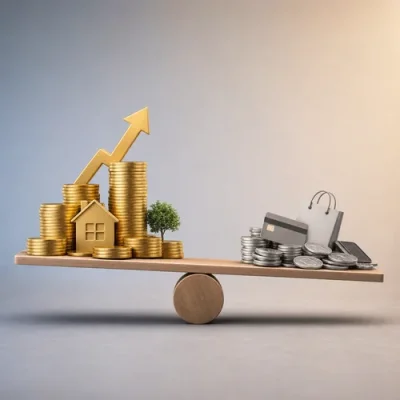
Well it basically boils down to this. Good debt puts money in your pocket after you have paid for the debt (interest), and bad debt takes money from your pocket on an ongoing basis.
In todays society, the world has gone through an explosion in bad debt. In the United States for example, for every $1 a person earns, they spend $1.20.
In Australia things are getting worse too. We spend $1.02 for every dollar earned. Back in the 1980's we would earn $1 and save 20c.
Bad Debt
The single most influencing factor in this curse of bad debt is the credit card. It is so easy to get a credit card these days, and even school kids have them. Most people I know have several of them, and you know what, they max them all out. People get caught in this vicious circle of paying one card off with another, and still the interest bill compounds at an alarming rate.
It is not only credit cards that are doing the damage, it is also the ability to get three years interest free furniture and home appliances with no money down. This is a huge trap, and when people live beyond their means and do not have the means to pay back their debt in the given time they are hit with massive interest rates and so the cycle continues.
So that is bad debt, and I didn't even include cars, holidays and clothes, all charged up on your card! You get the picture.
Good Debt
Now onto good debt. Personally, I love good debt, and any wealthy person will tell you the same thing. With good debt you can purchase income producing assets that put cash in your pocket, even after the interest bill is paid.
Some examples of this include property, shares and stocks, and your own business. It even includes things such as art, wine and other rare collectibles.
By leveraging other peoples money to buy such things, you are after a time able to put yourself into a fantastic financial position, and you can now begin to pay cash for those bad debt items like expensive clothes and exotic holidays.
When I was at school there was never any lessons on good and bad debt, and I'm pretty sure they still do not teach effective money and debt management.
It is unfortunate that in a society such as ours, that the government does not teach this to every man, woman and child as it has a massive impact on our lives. Just look at the sub prime fallout in the States to see how people who overextended themselves are now really in trouble.
There is a way out if you are in bad debt, and there are resources out there to financially educate yourself before you do get into any trouble.
We only have ourselves to rely upon to shape our financial future, and the longer we leave it the harder it gets. Eradicate the bad debt from your lives, and begin to live without that heavy weight around your neck.
Published: Wednesday, 25th Aug 2021
Author: 95



No comments yet. Be the first to share your thoughts.