The information on this website is general in nature and does not take into account your objectives, financial situation, or needs. Consider seeking personal advice from a licensed adviser before acting on any information.
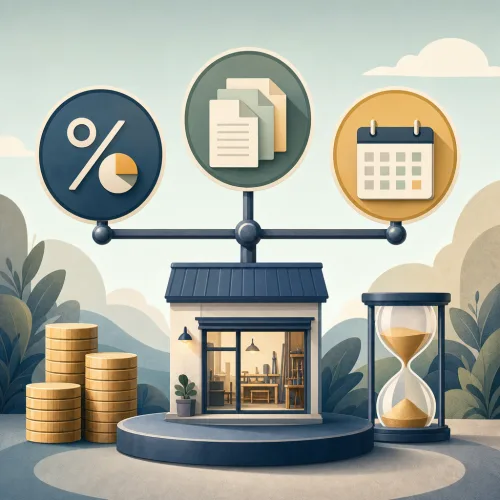
Business loan costs are shaped by more than the advertised interest rate. Learn how rates, fees, repayment frequency and loan structure affect the total cost of business finance in Australia.
When comparing business loans, the advertised interest rate is only one part of the borrowing cost. The total amount your business pays can also be affected by upfront fees, ongoing charges, repayment frequency, loan term, security requirements and the way interest or finance charges are calculated.
For Australian SME owners, understanding these cost drivers can make it easier to assess affordability before applying for finance. This guide explains how business loan rates, business loan fees and repayment structures can affect the total cost of business finance. It is general information only and does not take your business objectives, financial situation or needs into account.
If you are still at the early comparison stage, you can review general business loan options alongside the cost factors explained below.
Why the headline rate is not the same as total borrowing cost
A headline interest rate tells you how interest may be charged, but it does not always show the complete cost of a business loan. Two loans with similar advertised rates can have different total costs because of differences in:
- upfront establishment or application fees;
- monthly account keeping or facility fees;
- repayment frequency, such as weekly, fortnightly or monthly payments;
- whether repayments reduce the principal from the start;
- early repayment, discharge or break costs;
- the loan term;
- whether the facility is secured, unsecured or asset-backed;
- whether the product uses an interest rate, factor rate, discount fee or other pricing model.
The practical question is not only "what is the rate?" but "how many dollars will this finance cost over the period I expect to use it, and can my cash flow support the repayments?"
How business loan interest rates work
Business loan interest rates in Australia are generally influenced by lender criteria, market conditions, loan type, security, loan size, term, trading history, cash flow, credit profile and industry risk. Pricing can vary significantly between providers and between applicants.
Fixed and variable rates
A fixed rate usually means the rate is set for a defined period. This can make repayments more predictable, although some fixed-rate facilities may include limits or costs if you repay early or change the loan.
A variable rate may move up or down during the loan term. This can provide flexibility, but it also means repayments may change. A variable rate facility may suit some businesses, but it can create cash flow pressure if rates rise or margins tighten.
Secured and unsecured pricing
A secured business loan is supported by an asset or other form of security. Depending on the lender and circumstances, security may reduce the lender's risk, but it also creates consequences if the business cannot meet its obligations.
An unsecured business loan does not rely on a specific asset in the same way, although personal guarantees or other obligations may still apply. Unsecured finance can be faster or more flexible in some situations, but the pricing may reflect the lender's risk assessment.
Simple interest, annualised rates and other pricing methods
Some business loans use an annualised interest rate, while other products may quote pricing differently. For example, certain short-term business finance products may use a fixed fee, discount rate or factor rate rather than a traditional annual interest rate.
A factor rate is commonly expressed as a multiplier applied to the amount advanced. It can look simple, but it does not work the same way as an annual percentage rate. Because repayment may occur over a short period, the effective cost can be higher than it appears from the multiplier alone. Always ask how the total repayment amount is calculated and whether early repayment reduces the cost.
Common business loan fees to check
Business loan fees can change the overall cost, especially on smaller loans or short-term facilities where upfront charges are spread over a shorter period. Not every lender charges every fee, and fee names can vary, so it is worth asking for a full cost schedule before signing.
| Fee type |
What it may cover |
Why it matters |
| Application or establishment fee |
Assessment, setup or documentation |
Can increase the cost from day one, even if the rate looks competitive |
| Monthly or annual facility fee |
Ongoing account administration or access to a credit facility |
Can add up over longer terms or unused credit limits |
| Drawdown fee |
Accessing funds from a facility |
Relevant for lines of credit or facilities with multiple drawdowns |
| Early repayment or break cost |
Repaying or changing the loan before the agreed term |
Can reduce the benefit of refinancing or paying down debt early |
| Late payment or dishonour fee |
Missed, late or failed repayments |
Can add direct cost and may affect future borrowing assessments |
| Valuation, legal or security fees |
Costs related to secured lending or legal documentation |
Often relevant where property, equipment or other assets are involved |
| Broker or adviser fee |
Assistance arranging or comparing finance |
Should be disclosed so you understand who is paid, how and when |
Fees are not automatically a problem, but they should be assessed against the value and flexibility of the facility. A loan with a slightly higher rate but lower fees may cost less for some borrowers, while a loan with higher upfront costs may only make sense if the structure provides benefits the business needs.
How repayment structures affect business loan repayments
Business loan repayments are not all structured the same way. The repayment schedule can affect both total cost and day-to-day cash flow.
Principal and interest repayments
With principal and interest repayments, each payment generally covers interest plus part of the loan amount. Over time, the principal reduces, which can reduce the interest charged on the remaining balance. This structure can be useful where the business wants a clear path to paying down debt.
Interest-only periods
Some facilities may allow interest-only repayments for a period. This can reduce repayments in the short term, but the principal remains outstanding. Unless the business has a clear repayment plan, the total cost may be higher because the loan balance is not reducing during the interest-only period.
Lines of credit and revolving facilities
A business line of credit or revolving facility may allow a business to draw and repay funds as needed, up to an approved limit. Interest may only be charged on the amount used, but facility fees can apply even if the full limit is not drawn. These products can support working capital, but they require discipline to avoid carrying debt longer than intended.
Daily or weekly repayments
Some short-term business loans and alternative finance products use daily or weekly repayments. Frequent repayments can suit businesses with regular takings, but they may create pressure for businesses with lumpy income, seasonal revenue or slow-paying customers.
Weekly repayments can also make a loan feel more manageable because each payment is smaller than a monthly repayment. However, you still need to compare the total dollars repaid over the full term.
Balloon payments and residuals
Asset finance arrangements may include a balloon or residual payment at the end of the term. This can reduce regular repayments during the loan, but it leaves a larger amount to be paid, refinanced or otherwise dealt with at the end. The total cost should be assessed across the whole agreement, not just the regular repayment amount.
Repayment frequency and cash flow timing
Repayment frequency can have a major impact on affordability. A business with steady daily sales may find frequent repayments easier to manage than a business that invoices monthly and waits for customers to pay.
Before accepting a repayment schedule, consider:
- when your customers usually pay invoices;
- whether revenue changes seasonally;
- how wages, rent, supplier bills and tax obligations fall during the month;
- whether repayments leave enough working capital for normal operations;
- how the business would cope if sales temporarily fell or a major customer paid late.
A repayment that looks affordable on paper may still be unsuitable if it falls at the wrong time in your cash flow cycle.
How to estimate the total cost of business finance
To compare business loan costs, try to convert each option into total dollar terms. A calculator can help you test different loan amounts, terms and repayment assumptions. You can start with the site's finance calculators for general repayment modelling.
When estimating total cost, work through these steps:
- Confirm the amount received. Check whether fees are deducted from the advance or added to the loan balance.
- Identify the repayment amount and frequency. Multiply repayments across the expected term, allowing for any balloon, residual or final payment.
- Add upfront and ongoing fees. Include establishment, facility, drawdown, account keeping and security-related costs where they apply.
- Check early exit costs. If you expect to refinance or repay early, ask whether the cost reduces or whether the full fee still applies.
- Compare total dollars paid. Look at the overall amount repaid compared with the amount your business actually receives.
- Stress test the repayments. Consider whether the business could still meet repayments if revenue is delayed, costs rise or trading conditions change.
This approach does not replace accounting, tax or legal advice, but it can help you ask more informed questions before committing to a facility.
Why comparison rates may not tell the full story for business loans
Consumer loans often use standardised comparison rate disclosures, but business finance can be presented differently depending on the product and provider. Do not assume that every business loan quote is directly comparable from the headline rate alone.
When comparing quotes, ask each provider to explain:
- the annualised rate or equivalent cost where available;
- the total amount repayable over the expected term;
- all upfront, ongoing and exit fees;
- whether the price changes if you repay early;
- whether repayments are fixed, variable or linked to turnover;
- what security, guarantees or covenants are required.
The aim is to compare like with like. If one quote is for a three-month facility and another is for a three-year term loan, the advertised rate or fee may not reflect the same risk, flexibility or cost period.
When a lower rate may not mean a lower cost
A lower advertised interest rate can be attractive, but it may not always produce the lowest total cost for your business. For example, a lower-rate loan may become more expensive if it has higher establishment fees, a longer term than required, costly exit conditions or charges for unused limits.
On the other hand, a facility with a higher rate may still be appropriate in some situations if it is used for a short period, provides needed flexibility or helps fund a profitable business activity. The key is to assess the cost against the purpose, timing and cash flow capacity of the business.
Before choosing a loan, consider whether the finance is being used for:
- short-term working capital;
- equipment or vehicle purchases;
- stock, materials or seasonal demand;
- business expansion;
- refinancing or consolidating existing debt;
- covering a temporary cash flow gap.
The more clearly you define the purpose, the easier it is to judge whether the term, repayment structure and total cost are reasonable for that use.
Questions to ask before accepting a business loan offer
Before signing a business loan agreement, ask practical questions that reveal the real cost and flexibility of the facility:
- What is the total amount my business will repay if the loan runs to the agreed term?
- How much money will my business actually receive after any deducted fees?
- Are repayments fixed, variable or linked to revenue?
- What happens if I want to repay early?
- Are there missed payment, dishonour or default fees?
- Are there personal guarantees, security interests or asset risks?
- Can the lender change the rate, limit or repayment terms during the facility?
- What information will be reported or considered if the business applies for finance later?
- Does the repayment schedule match my business cash flow cycle?
- Who is being paid a commission or fee for arranging the finance?
If the terms are difficult to interpret, you may want to speak with a finance broker, accountant or legal adviser before proceeding. The right support can help you understand the documents, but any decision should still be based on your business circumstances and the provider's criteria.
Final thoughts: focus on total cost and cash flow fit
Business loan costs are shaped by the combination of interest rate, fees, repayment structure, term and flexibility. A useful comparison looks beyond the headline rate and considers the total amount repayable, the timing of repayments and the risks attached to the facility.
Before applying, make sure you understand how the finance will be priced, how repayments will affect cash flow and what costs may apply if your plans change. A loan that fits your business should be assessed not only by how accessible it appears, but by whether the total cost and repayment structure are manageable for your circumstances.
Published: Saturday, 1st Aug 2026
Author: Paige Estritori




Weekly repayments caught us out once; looked cheap monthly, but it really messed with BAS and supplier timing.