
The information on this website is general in nature and does not take into account your objectives, financial situation, or needs. Consider seeking personal advice from a licensed adviser before acting on any information.
Secured and unsecured business loans can differ in the assets pledged, borrower risk, documentation, pricing and eligibility criteria. Here is what Australian SME owners should understand before comparing options or applying.
Secured and unsecured business loans are two common ways Australian SMEs access finance, but the difference is not simply about whether a loan is easy or difficult to get. The type of security offered can affect how a lender assesses risk, what information it asks for, the loan amount or term it may consider, and what happens if the business cannot meet repayments.
This guide explains secured vs unsecured business loans in practical terms, including collateral, personal guarantees, PPSR business loans and key questions to ask before applying. It is general information only and does not consider your business objectives, financial situation or needs.
What is a secured business loan?
A secured business loan is a loan where the borrower provides an asset or other form of security to support the finance. If the borrower defaults, the lender may have rights to recover the debt through the secured asset, subject to the loan contract and applicable law.
Security can vary widely depending on the lender, loan purpose and business structure. Common examples may include:
- Commercial property, such as a warehouse, office, shopfront or industrial unit.
- Residential property offered by business owners or directors, where accepted by the lender.
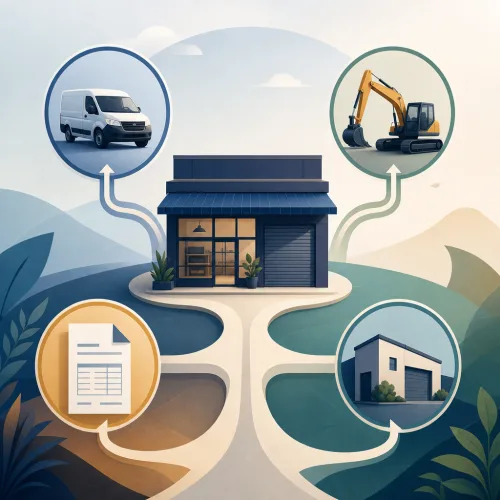
- Vehicles, plant or equipment, especially where the finance is used to buy or refinance that asset.
- Business assets, such as stock, receivables, fit-out, machinery or other personal property.
- A general security agreement over some or all business assets.
Because the lender has an asset or security interest to rely on, secured business loans may sometimes be considered for larger amounts, longer loan terms or different pricing than unsecured loans. However, this depends on the lender's credit assessment, the value and suitability of the security, the business's financial position and the proposed loan purpose.
What is an unsecured business loan?
An unsecured business loan does not require the borrower to provide a specific asset, such as property or equipment, as collateral for the loan. That can make unsecured business loans appealing for SMEs that need working capital, have limited assets available, or do not want to tie finance to a particular asset.
However, "unsecured" does not mean risk-free. Lenders still assess the business and its owners. They may consider revenue, cash flow, trading history, credit conduct, existing debts, industry risk, bank statements, tax obligations and the purpose of the finance.
Many unsecured business loans also require personal guarantees from directors, business owners or other parties. A personal guarantee is not the same as offering a specific asset as security, but it may still expose the guarantor to personal liability if the business does not repay the loan.
Secured vs unsecured business loans: key differences
The right comparison depends on the lender and product, but the following table outlines common distinctions small business owners should understand.
| Feature | Secured business loan | Unsecured business loan |
|---|
| Security | Usually supported by property, equipment, vehicles, receivables or other business or personal assets. | No specific asset is pledged as collateral, although guarantees may still apply. |
| Borrowing amount | May support larger amounts where the security and business position are acceptable to the lender. | May be more limited, depending on turnover, cash flow, credit profile and lender criteria. |
| Loan term | May allow longer terms, especially where secured by property or longer-life assets. | Often used for shorter-term working capital needs, though terms vary by lender. |
| Pricing | Security may reduce lender risk, but rates and fees still depend on the application and market conditions. | May have higher pricing than comparable secured finance because the lender has less collateral protection. |
| Documentation | May require asset details, valuations, insurance evidence, property documents or PPSR-related checks. | May involve fewer asset documents, but lenders still need financial and business information. |
| Main risk | The secured asset may be at risk if the borrower defaults. | Business cash flow, credit standing and personal guarantees may still create significant risk. |
How business loan security works in Australia
Business loan security gives a lender additional rights if the borrower fails to repay. The exact rights depend on the loan agreement, the type of asset and how the security is documented.
Property security
Where real property is used as security, the lender may take a mortgage or other registered interest. This can involve valuations, legal documentation and checks on existing mortgages or encumbrances. Property security can be significant, so borrowers and guarantors should understand what assets are being offered and what enforcement rights may apply if repayments are not met.
Equipment, vehicles and other business assets
For business assets such as vehicles, plant, machinery, stock or receivables, a lender may take a security interest under the Personal Property Securities Act framework. This may be recorded on the Personal Property Securities Register, commonly known as the PPSR.
A PPSR registration is a public notice that a party claims a security interest in certain personal property. It is common in asset finance, equipment finance and some broader business loan structures. For a borrower, the practical issue is that the asset may be subject to lender rights until the debt is repaid or the security is released.
General security agreements
Some secured business loans involve a general security agreement over a company's present and future assets. This can be broader than security over one specific item of equipment. Business owners should read these documents carefully and obtain professional advice where needed, particularly if multiple lenders, suppliers or asset financiers may have competing interests.
Personal guarantees: why unsecured does not always mean no personal exposure
Personal guarantees are a major point of confusion in business lending. A lender may describe a loan as unsecured because no specific asset is pledged as collateral, while still requiring directors or owners to guarantee repayment.
If a guarantor signs a personal guarantee, they may become responsible for the business debt if the borrower cannot repay. Depending on the guarantee terms, the lender may pursue the guarantor personally. This can affect personal cash flow, credit standing and assets.
Before signing a guarantee, consider asking:
- Who is being asked to guarantee the loan?
- Is the guarantee limited to a specific amount or unlimited?
- Does the guarantee cover fees, interest, enforcement costs or future credit facilities?
- Can the guarantee be released after certain repayment milestones or refinancing?
- What happens if ownership of the business changes?
These are legal and financial questions, so independent legal and accounting advice can be valuable before committing.
When might a secured business loan be considered?
A secured business loan may be considered where the business has suitable assets and the finance purpose aligns with a longer-term or larger funding need. Examples may include purchasing equipment, buying commercial premises, refinancing existing secured debt, funding expansion or supporting a significant working capital requirement.
Potential advantages may include:
- access to loan structures that may not be available without security;
- the possibility of longer repayment terms, depending on the asset and lender;
- pricing that may reflect the lender's lower perceived risk; and
- alignment between the loan and the useful life of the asset being financed.
The trade-off is that the asset offered as security may be at risk if the business defaults. There may also be valuation costs, legal documentation, discharge fees, insurance requirements or restrictions on selling the secured asset without lender consent.
When might an unsecured business loan be considered?
An unsecured business loan may be considered where speed, flexibility or limited available collateral are important factors. It may suit short-term working capital, inventory purchases, marketing campaigns, bridging seasonal cash flow gaps or funding a smaller project.
Potential advantages may include:
- no need to pledge a specific property or asset as collateral;
- a simpler asset documentation process in some cases;
- flexibility for businesses that lease premises or do not own major assets; and
- the ability to fund general business purposes, subject to lender criteria.
The trade-off is that unsecured business loans may have tighter loan limits, shorter terms or higher overall costs than comparable secured lending. Approval, pricing and terms depend on the lender's assessment of the business and any guarantors.
How security can affect business loan eligibility and pricing
Lenders generally assess both the borrower and the loan structure. Security is only one part of the decision. A lender may still decline a secured loan if the business cannot demonstrate capacity to repay, if the security is not acceptable, or if the loan purpose does not fit its policy.
Common assessment factors include:
- Cash flow: whether the business can service repayments while meeting other expenses.
- Trading history: how long the business has operated and whether revenue is stable or growing.
- Credit conduct: business and personal credit history, including defaults, late payments or high existing debt.
- Security quality: the type, value, condition and marketability of the asset offered.
- Loan purpose: whether the funds are for working capital, asset purchase, expansion, refinancing or another business need.
- Industry and concentration risk: how exposed the business is to seasonal, customer, supplier or market changes.
If you are still comparing broad business loan options, it can help to identify whether your preferred structure is secured, unsecured or a mix of both before requesting quotes.
What to check before applying
Before applying for a secured or unsecured business loan, step back from the headline rate or advertised approval time and review the full structure. The most suitable option for one business may be inappropriate for another.
1. The real purpose of the funds
Match the loan term and structure to the purpose. For example, using a short-term unsecured loan to fund a long-life asset may put pressure on cash flow. Using property security for a small short-term need may be more complex than necessary.
2. Repayment impact on cash flow
Look at repayments under normal, slower and stressed trading conditions. A finance facility that appears manageable during a strong sales period may become difficult if revenue slows or customers pay late. You can use a supplied business finance calculator as a starting point for estimating repayment impact, then confirm assumptions with the lender or adviser.
3. Total cost, not just the interest rate
Business loan rates are important, but they are not the only cost. Ask about establishment fees, monthly fees, valuation costs, legal costs, early repayment fees, line fees, default interest and discharge costs. Compare the total repayment obligation over the expected loan term.
4. Security and guarantee exposure
Clarify exactly what the lender is relying on. Is there a mortgage, a specific asset security interest, a general security agreement, a PPSR registration, a director guarantee or a combination of these? Understand what could happen if repayments are missed.
5. Flexibility
Some facilities allow redraw, early repayment, interest-only periods, seasonal repayment structures or revolving access to funds. Others are more rigid. Flexibility can be useful, but it may affect pricing or eligibility.
6. Documentation readiness
Being organised can improve the application experience, although it does not guarantee approval. Lenders may request bank statements, financial statements, tax returns, BAS, ATO account details, profit and loss reports, balance sheets, asset details, lease agreements or a business plan. For more general preparation steps, see this guide to fast-tracking your small business loan approval.
Questions to ask a lender or broker
Whether you apply directly or seek help comparing lenders, it is worth asking clear questions before accepting any offer:
- Is this loan secured, unsecured or supported by a personal guarantee?
- What assets or guarantees are required?
- Will any security interest be registered on the PPSR?
- What fees apply at establishment, during the loan and at payout?
- What happens if the business misses a repayment?
- Can the loan be repaid early, refinanced or restructured?
- Are there restrictions on selling secured assets or changing business ownership?
- How will the lender assess ongoing affordability?
These questions can help you compare more than the advertised rate. They also make it easier to understand the risk you are taking on personally and commercially.
The bottom line
The main difference between secured and unsecured business loans is the role of collateral. Secured business loans involve an asset or security interest that may support the lender's risk assessment. Unsecured business loans do not require a specific asset as collateral, but they may still involve personal guarantees and detailed credit assessment.
For Australian SME owners, the key is not to assume one option is automatically better. Consider the loan purpose, cash flow, available assets, personal guarantee exposure, repayment flexibility and total cost. Approval, rates, fees and terms will depend on your circumstances and the lender's criteria, so compare carefully and seek professional advice where appropriate.
Published: Saturday, 1st Aug 2026
Author: Paige Estritori




No comments yet. Be the first to share your thoughts.