

Small Business Finance :: News
SHARE

Share this news item!

Financial Strain Intensifies for Logistics SMEs in Australia's Two-Speed Economy

Understanding the Growing Economic Disparities Affecting Small Logistics Businesses

Financial Strain Intensifies for Logistics SMEs in Australia's Two-Speed Economy?w=400

The information on this website is general in nature and does not take into account your objectives, financial situation, or needs. Consider seeking personal advice from a licensed adviser before acting on any information.

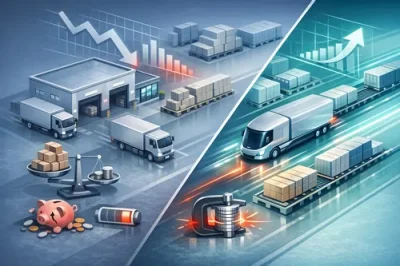
Recent data from Equifax highlights a growing divide in Australia's business landscape, with large enterprises driving credit demand growth while small and medium-sized enterprises (SMEs), particularly in the logistics sector, face increasing financial strain.
In March 2026, overall business credit demand rose by 3.5% year-on-year, predominantly fueled by a 5.9% increase from large businesses.
Conversely, SME credit demand declined by 5.8% during the same period, indicating a widening economic disparity.

The logistics sector exemplifies this trend, experiencing a 4.2% year-on-year decrease in overall credit demand and an 11.6% drop in business loan demand. This decline suggests that logistics SMEs are shifting their focus from growth initiatives to short-term operational survival strategies.

Several factors contribute to the financial challenges faced by logistics SMEs:

  • Interest Rate Increases: Rising interest rates have escalated borrowing costs, making it more expensive for SMEs to access necessary funds.
  • Persistent Inflation: Ongoing inflationary pressures have increased operational expenses, squeezing profit margins for small businesses.
  • Global Events: International disruptions have further impacted supply chains and operational stability, disproportionately affecting smaller operators.

Brad Walters, General Manager of Commercial at Equifax, notes that smaller operators are likely feeling the cumulative weight of these factors more acutely, as they may lack the resources to absorb potential shocks as easily as their larger counterparts.

To navigate these challenges, logistics SMEs should consider the following strategies:

  • Strengthen Financial Management: Implement robust budgeting and forecasting practices to better manage cash flow and anticipate financial needs.
  • Explore Alternative Financing: Investigate non-traditional lending options that may offer more flexible terms suited to SMEs.
  • Enhance Operational Efficiency: Identify areas where cost reductions can be achieved without compromising service quality, such as optimising supply chain processes.

By proactively addressing these areas, logistics SMEs can better position themselves to withstand the pressures of a two-speed economy and work towards sustainable growth.

Published:Wednesday, 6th May 2026
Author: Paige Estritori

Please Note: We do not endorse any specific products or companies. Some content is sourced from third parties, including press releases, and may not be independently verified for accuracy or completeness.

Share this news item:

Finance News

Understanding the Impact of Payday Super Reforms on SME Cash Flow
06 May 2026: Paige Estritori
Starting 1 July 2026, Australian small and medium-sized enterprises (SMEs) will face significant changes due to the implementation of Payday Superannuation reforms. These reforms mandate that employers pay the 12% superannuation guarantee concurrently with wages, shifting from the current quarterly payment system. This alteration is poised to have substantial implications for SME cash flow management and borrowing capacity. - read more
Australian SMEs Boost Productivity Through Increased Asset Finance
06 May 2026: Paige Estritori
In the face of economic uncertainty, Australian small and medium-sized enterprises (SMEs) are demonstrating resilience by significantly increasing their investment in asset finance. Data from Valiant Finance reveals a 41% surge in asset finance volumes during the third quarter of 2025, followed by a 33% increase in the fourth quarter. This trend underscores a strategic shift among SMEs towards enhancing long-term productivity through capital investments. - read more


Business Loans Articles

Practical Tips for Maintaining a Healthy Cash Flow in Your Small Business
Cash flow refers to the movement of money into and out of your business. It encompasses all the income your business earns from sales, payments from customers, and investments, as well as all the expenses for operational costs, salaries, and other expenditures. - read more
Flexibility and Freedom: Exploring the Benefits of Working Capital Financing
Welcome to our exploration of working capital financing. For many Australian small business owners, managing cash flow and covering daily operational expenses can be a major challenge. This is where working capital loans come into play. - read more


Need Help Finding a Loan?
Business Loan Quote
Loan Amount:
Postcode:

All quotes are provided obligation-free by a participating broker from our national referral partner network. We respect your Privacy.

All finance quotes are provided free (via our secure server) and without obligation.
We respect your privacy.

Knowledgebase
Adjustable-Rate Mortgage (ARM):
A type of mortgage in which the interest rate applied on the outstanding balance varies throughout the life of the loan.